

Your Place at the Table
➤ by Isabel Jennings
Battles had been fought. Blood has been spilled. King Saul had fallen. His successor had been murdered by assassins trying to ingratiate themselves with the new king. Power had shifted and David had been crowned king.
And then David asks a strange question:
Is there still anyone left of the house of Saul to whom I can show kindness for Jonathan’s sake?, 2 Samuel 9:1-3
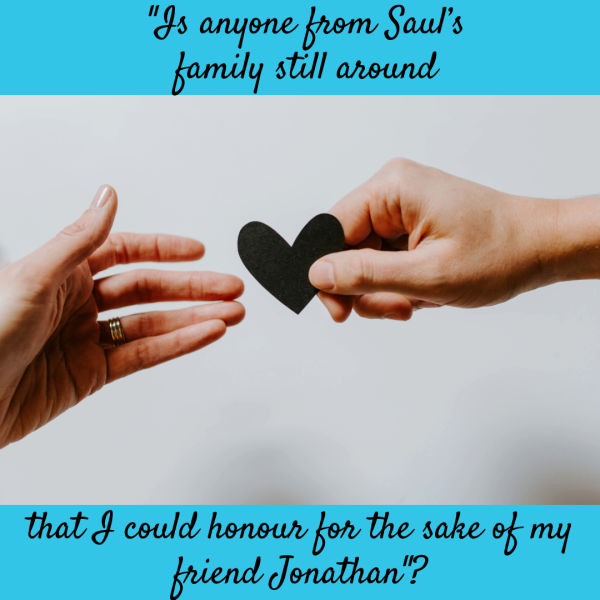
This wasn’t a trick to have Saul’s descendants brought to him. This was a genuine ask. This must’ve confused those in David’s court. This was not how new kings acted.
In ancient times new kings typically tried to destroy any heir related to the previous king who might have a claim to the throne. New kings didn’t look for survivors. They looked for threats to their new throne and they eliminated them.
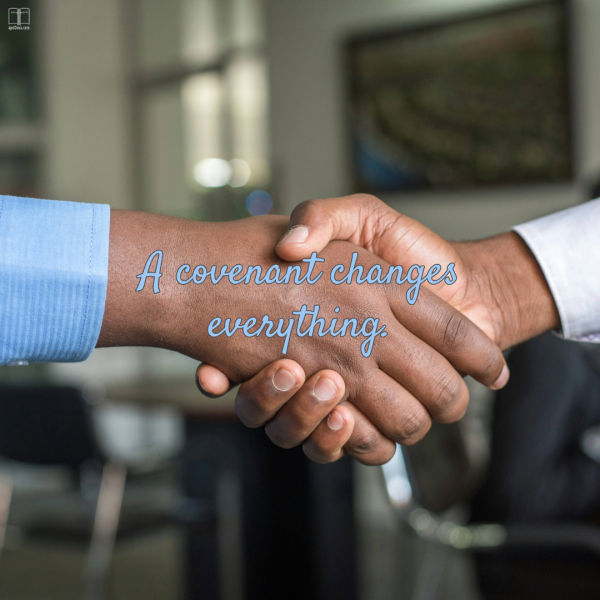
But David wasn’t asking for descendants to eliminate them and secure his kingdom. He was honoring a covenant, and covenants change everything.
Promises Made
Years earlier, before David ever wore a crown, he stood in a field with Jonathan—the son of King Saul, the current king of Israel. Jonathan was his close friend. 1Samuel 20:17 says that Jonathan loved David as he loved his own soul.
David was suspecting that King Saul intended to kill him, and in 1 Samuel 20, Jonathan risks his life to put his father Saul’s true intentions toward David to the test. When Saul commands Jonathan to bring David to him so that he can kill him, and throws a spear at his own son, Jonathan realizes that his father’s heart is bent on destroying David.
It is then, that Jonathan does something extraordinary. He sends David away to keep him safe and to preserve his life from the certain death of staying in Saul’s court. But, before Jonathan releases David to run to safety, he makes David swear an oath:
Show me unfailing kindness like the Lord’s kindness… and do not ever cut off your kindness from my family, 1 Samuel 20:14–15.
That word “kindness” isn’t sentimental or situational. It’s a binding promise. It was a covenant that David would neither kill Jonathan nor his descendants. That wasn’t just sentimental or for old time’s sake. Jonathan knew that David was going to be king. And Jonathan, though he was next in line for the throne by birth, recognized that God had chosen another.
Broken by the Fall
Fast forward about 10-15 years, or so (some scholars believe). Saul and Jonathan both die in battle, and the kingdom collapses into chaos.
Tucked away in the palace, was a five-year-old boy named Mephibosheth. He was Jonathan’s son. 2 Samuel 4:4 tells us that when news of Saul and Jonathan’s deaths reached the palace, Mephibosheth’s nurse grabbed him and ran.
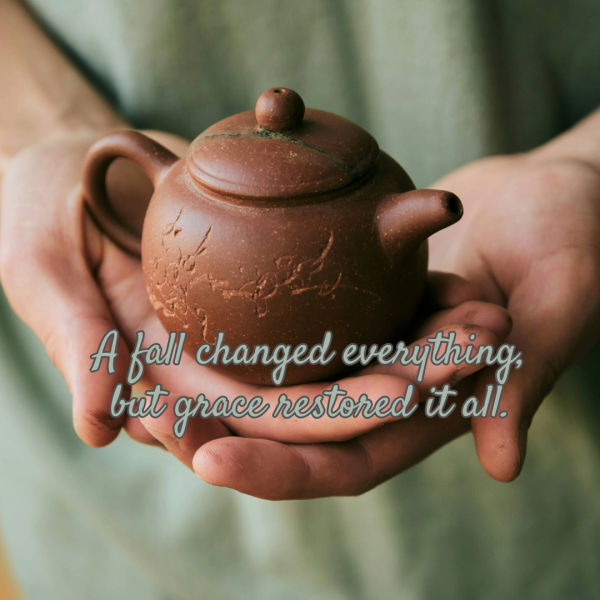
That nurse knew that when a king is overthrown, heirs don’t usually survive. She knew this boy was in immediate danger and attempted to flee from the palace with the child. In the panic of escape, the child was dropped or injured in some way. The injury was so severe that from that moment on, he was permanently lame in both feet.
One moment he’s royalty, a young prince being attended to and being carried by servants. The next moment, he’s fallen and he’s broken.
He’s exiled to a place called Lo-debar. The name literally means “no pasture”.
There was no provision, no promise, no hope and no future there. Mephibosheth grows up and it’s very likely that he believes that the throne should have rightfully been his by inheritance, David was an enemy who would eliminate him given the chance, and that his future to change either of those things was bleak because his weakness disqualified him.
Until kindness came looking.
Don't Be Afraid
Years later, when David was finally fully established as king over all of Israel and the wars and threats were over, he didn’t ask “Who’s left that might oppose me?” David instead asked, “Is there anyone left that I can bless?”
Not judgment. Not revenge. It was kindness and unmerited favor (grace).
A servant named Ziba tells David about Mephibosheth. And when Mephibosheth was summoned to the palace, every step must have felt like a step towards execution. Kings in those days weren’t summoning heirs to bless them. He likely thought this was the end, maybe even despite hearing the good news that David wanted to show him kindness.
So, when Mephibosheth falls facedown before David, calling himself a “dead dog,” David says the words that echo throughout Scripture: Don’t be afraid, 2 Samuel 9:7.
David didn’t bless Mephibosheth because of Mephibosheth. He showed him kindness and blessed him for Jonathan’s sake, because of their covenant.
David restored all the land that belonged to Saul, gave him a place in Jerusalem where he would eat at the king’s table and have the status of a son. Mephibosheth didn’t earn it, and he certainly didn’t deserve it. He received it because of a covenant made before he was born.
David reminds Mephibosheth of the covenant. Not one Mephibosheth made, but one made on his behalf. And suddenly, what was lost is restored. Land. Identity. Position. David gives him back all the fields of his grandfather Saul. That’s restoration.
Then David says something even bigger: “You will always eat at my table.”
Mephibosheth doesn’t just receive provision. That would have been kindness. David went one step further in the fulfillment of his covenant to his friend Jonathan. He gave Jonathan’s son a place to belong. He gave him relationship. Mephibosheth ate at the king’s table like one of the king’s own sons. And every time he sat down, the table covered his brokenness.
We were created in the Garden of Eden with direct access and relationship to God. Like Mephibosheth, we were like princes in the Garden of Eden, but a deliberate choice separated us from God.
As a result of that fall that left us broken, we were all exiled away from God’s direct presence. Sometimes our brokenness is a result of someone else’s mistake but often it’s our own mistake. Either way, it’s something that you can’t fix or change, and you are affected regardless.
God shows up to that broken and forgotten place, with the intention of honouring His covenant. He repeatedly shows up in our lives and throughout scripture, with these words: “Do not be afraid”. The wages of sin is death (Rom 6:23). We should be afraid to fall into the hands of an Almighty God as a sinner. We are enemies of God, and we should expect to be destroyed. But, like Mephibosheth, we’re surprised and shocked, about what happens to us next.
In this story, the Bible keeps repeating this phrase like it wants us to notice something: “Mephibosheth ate at the king’s table like one of the king’s sons.”
Mephibosheth still couldn’t walk, but he no longer had to live like a forgotten orphan in Lo-debar. At the table, no one could see Mephibosheth’s lame feet, because David’s table covered the effects of the fall. And when David’s sons looked around the table, they didn’t see a broken man. They saw a man who had been grafted into their family.
Mephibosheth always ate at the king’s table. Not occasionally. Not only when he was well-behaved. Always. The same covenant that brought him in, gave him space to stay there for his entire life.
That’s the gospel.
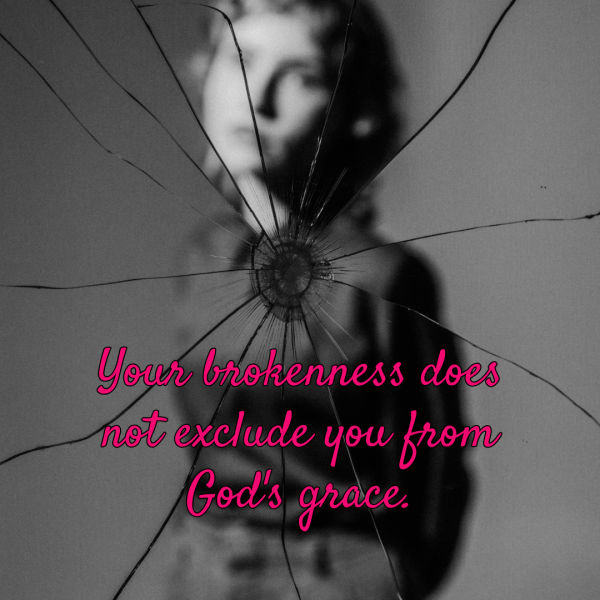
We were dropped.
We were wounded and sometimes it was by the hands of those we should have been able to trust with our lives.
We were hiding in our own Lo-debar. Afraid. Alone. Ashamed. Broken.
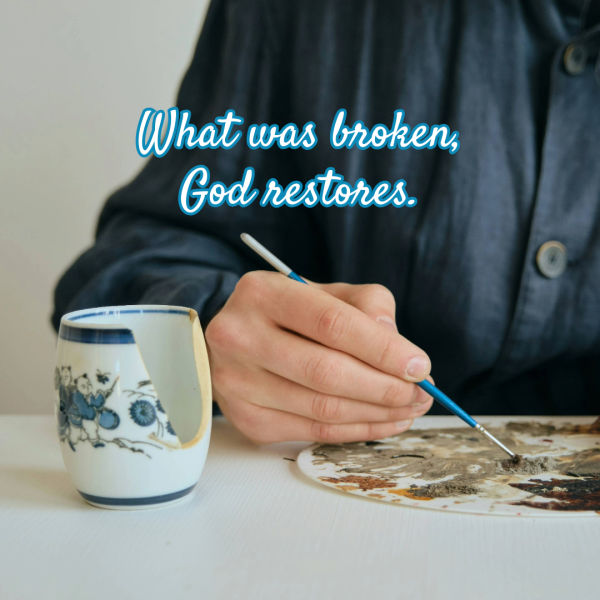
God’s grace is like that. It doesn’t deny that you are broken or ashamed. His grace repositions it. That brokenness is covered by the table that you are invited to sit at. The table made possible by what Jesus did for you when He died on that cross.
God looks at you with goodness, love and kindness. It’s not because of anything you’ve done but because of a covenant made before we were born and sealed with the blood of His Son, Jesus Christ. That covenant interjects grace and mercy and redemption into your life, into hidden places where death and destruction should have awaited you.
You are restored because of Jesus’ faithfulness.
You are adopted because of Jesus’ obedience.
You are welcomed like a son or daughter to sit at God’s table.
Hear the kindness of God that is calling your name. The covenant Jesus negotiated in His own blood, still stands. The table is set, and the King is still asking: “Is there anyone left I can show kindness to?”
Yes, there is. It’s you.
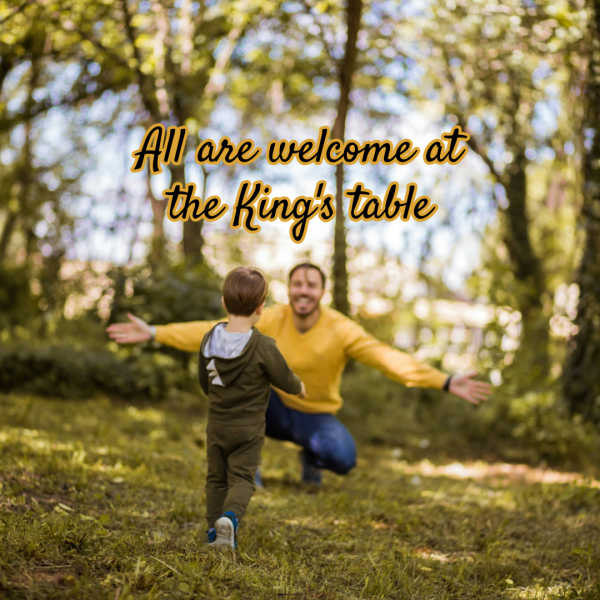
So, pull up your chair. Not because you earned it. Not because you fixed everything that was broken. Not because you finally became strong enough. You sit at that table for one reason alone: the King invited you.
The grace that reached for Mephibosheth reaches for you. The same grace that carried him from the shadows of Lo-Debar brings you into the light of the King’s presence. Your past may have left scars. Your story may still carry the limp. But at the table of the King, grace covers what shame once exposed.
And every time the enemy whispers that you don’t belong, you can look across the table and remember— the covenant was never built on your strength. It was built on His faithfulness.
Sit down, child of the King.
The table is set.
Your place is secure.
He promised that He would never leave you and never forsake you.
And His grace will always have the final word.
From the article, SEU LUGAR À MESA, by Isabel Jennings
Go ye therefore, and teach all nations, baptizing them in the name of the Father, and of the Son, and of the Holy Ghost: Teaching them to observe all things whatsoever I have commanded you: and, lo, I am with you alway, even unto the end of the world. Amen.
Matthew 28:19-20
Unless stated otherwise, all Bible passages quoted in orange are from the KJV translation.
Follow us:
You can unsubscribe anytime. For more details, review our Privacy Policy.
God's Word for Today
Recent Articles


-
Hope And Expectation: Dare To Take The First Step.
 Will everyone be receptive to God's hope and expectation? Unfortunately, no. Many will stubbornly resist and rebel against God. Ultimately, each individual must make a clear decision for themselves. H…
 -
Your Place at the Table
It happened in a moment, and everything changed. But what if your lowest point is where God's grace begins your greatest restoration? -
How to Pray for Healing.
How to pray for healing is a HUGELY misunderstood topic. I’ve been healed from migraines, fibromyalgia and cataracts. Here’s how you, too, can be healed according to the Bible.


Copyright © | godsword4today.com | All rights reserved
NOTICE OF LIABILITY: ALL INFORMATION ON GOdsword4today.COM IS PROVIDED WITHOUT GUARANTEE FOR its ACCURACY. NO LIABILITY WILL BE ASSUMED FOR DAMAGES RESULTING FROM THE USE OF THE INFORMATION OBTAINED. DESPITE CAREFUL CONTROLS, WE DO NOT ASSUME LIABILITY FOR THE CONTENT OF EXTERNAL LINKS. THE OPERATORS ARE EXCLUSIVELY RESPONSIBLE FOR THE CONTENT OF THE LINKED PAGES.