

- Home
- Encouragement
- You Were Chosen
You Were Chosen
➤ by Isabel Jennings
In the ancient Roman world, adoption was far more than simply giving a child a new home. It could completely change a person’s identity, position, and future.
There was an important distinction between being born into a family and being deliberately chosen and adopted into one. Roman family life operated under the authority of the male head of the household, whose legal power over the family was extensive. Because of this, a person’s place within a family could be deeply affected by the authority and decisions of the father.

Adoption carried a deliberate sense of being brought into a family by choice. An adopted child was wanted. They were intentionally chosen and because of this, adoption carried tremendous significance.
It meant being brought under the authority and protection of a new father, receiving a new family identity, and gaining a new place within that family. The adopted person was no longer defined by their previous family or former status. All of that was replaced.
Adoption fundamentally changed their legal identity, relationships, responsibilities, and future. And that change was permanent because while a biological child could have been disowned and adopted one could not be.
Paul takes that powerful cultural picture and brings it straight into his letters to the Church. When he uses the language of adoption to describe what God has done for us, his readers would have understood that this was far more than a change of labels. Adoption meant a complete change of identity, belonging, position, and inheritance. It meant that you were no longer defined by where you had come from but that you now belonged to a new family, under a new name, with a new future.
He used that language to describe to the new body of believers what God had done in Christ.
In love he predestined us for adoption to sonship through Jesus Christ, Ephesians 1:4–5.
Do you see the beauty of that?
God chose you.
Not because you impressed Him. Not because you performed well enough. Not because you cleaned yourself up enough. He chose you because He loved you.
The gospel isn't the story of people desperately trying to convince God to love them. It's the story of a God who loved them so much that He made a way home for them. And that way is Jesus.
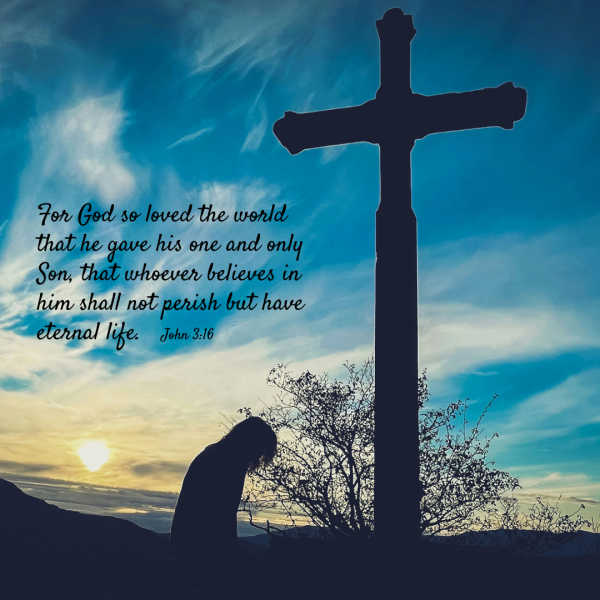
Adoption in ancient Rome had a powerful meaning. A biological son could be disowned for numerous reasons, but an adopted child would be a permanent part of the family. They couldn’t disown them.
This wasn't God saying, “Come stay for a while and we'll see how this goes.”
This wasn't a trial period.
God wasn’t bringing you into his family as a temporary guest. Through Jesus Christ, He gives you a place as a child.
The apostle Paul said: You are no longer a slave, but God’s child; and since you are his child, God has made you also an heir, Galatians 4:7.
You are no longer a slave. Now you are a child. And because you're His child, you're an heir. That's a completely different identity. You aren't standing outside the house hoping somebody has pity and lets you in. You have been brought into the family. You’ve been seated at the table. You have a name. You have a place. You have an inheritance. You belong.
In the Roman understanding of adoption, an adopted person's former legal relationships could be fundamentally transformed. Old obligations could be severed, while new obligations and privileges were established within the new family. The person received a new standing and a new identity.
That makes Paul's message even more powerful. The gospel doesn't simply make you a slightly improved version of who you used to be. It gives you a new identity.
Paul writes, If anyone is in Christ, the new creation has come: The old has gone, the new is here! 2 Corinthians 5:17.

You don’t go by your old name anymore. You are now called by a new name. Your past doesn't get the final word. Your failures don't get the final word. Your shame doesn't get the final word. What somebody said about you doesn't get the final word.
Your Father has the final say, and your Father says, “You are Mine.”
Romans 8:16–17 says, The Spirit himself testifies with our spirit that we are God’s children. Now if we are children, then we are heirs—heirs of God and co-heirs with Christ.
Inheritance was not simply something that began when a father died. Being part of a family meant sharing in the family's status, resources, responsibilities, and future. So, when Paul says that we are God's children and therefore heirs, he's talking about far more than receiving something someday. He's talking about your position now.
You don't have to earn your place at the table. You don't have to compete with the other children. You don't have to prove that you're worthy of the inheritance. The inheritance isn't a paycheck or a payback. You receive it because you belong. And you belong because God made a way through Jesus.
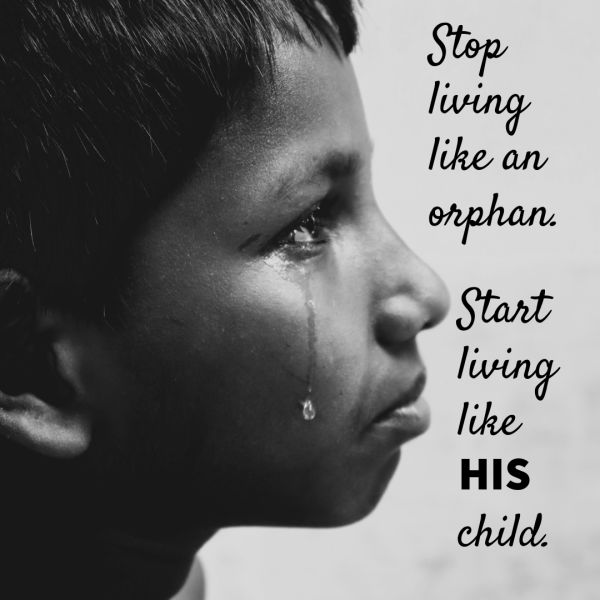
Romans 8:15 says, The Spirit you received does not make you slaves, so that you live in fear again; rather, the Spirit you received brought about your adoption to sonship.
You can be adopted and still live like an orphan. You can belong and still feel like you have to earn your place. You can have a Father and still live like nobody wants you. You can have an inheritance and still spend your life begging for approval. You can be standing in the house while still believing you're an outsider who doesn’t deserve to have a seat at the table.
John writes, See what great love the Father has lavished on us, that we should be called children of God! 1 John 3:1.
You are not an employee, not a stranger or an outsider. You are His child.
Maybe you've spent years trying to prove your worth. Maybe you've believed that your value is measured by what you've accomplished. Maybe you've carried rejection into every room you've ever entered. Maybe you've wondered whether God could really want someone with your history.
You were not chosen because you were impressive. You were chosen because God is loving.
You didn't earn the invitation. Jesus made the way.
You didn't purchase your place in the family. Jesus paid the price.
You didn't build the bridge back to God. Jesus became the bridge.

And you don't have to spend the rest of your life auditioning for a place you've already been given.
So, when shame says, “You don't belong,” answer it with the truth of the Gospel: “I know whose I am.”
When failure says, “You've gone too far,” answer it with: “I have a Father who made a path to forgiveness.”
When performance says, “You need to do more,” answer it with: “Jesus has already done what I could never do.”
And when you feel like you're standing on the outside looking in, remember: You were chosen. You were brought near. You were given a new identity. You were made an heir. You were adopted into the family of God.
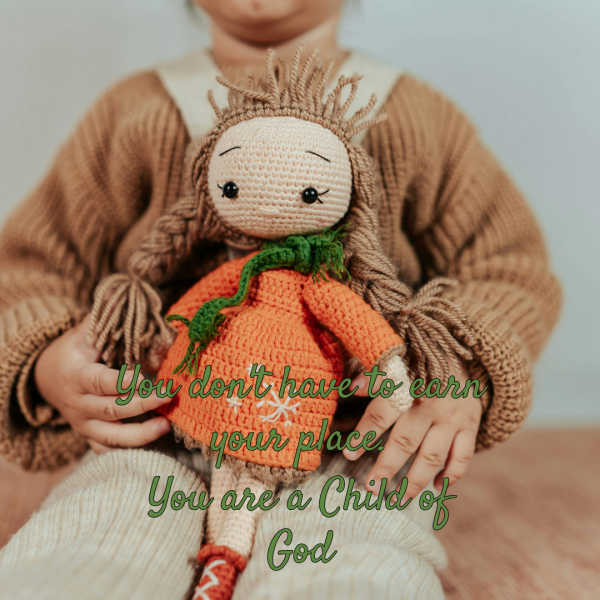
You don't have to audition. You don't have to perform. You don't have to prove yourself. You don't have to earn your way home.
The Father has already made a way. He brought you home. Not as a guest. Not as a servant. Not as someone waiting to see if you measure up.
As His child.
You don't have to keep wondering whether you belong.
You do.
From the article, Você Foi Escolhido, by Isabel Jennings

Go ye therefore, and teach all nations, baptizing them in the name of the Father, and of the Son, and of the Holy Ghost: Teaching them to observe all things whatsoever I have commanded you: and, lo, I am with you alway, even unto the end of the world. Amen.
Matthew 28:19-20
Unless stated otherwise, all Bible passages quoted in orange are from the KJV translation.
Follow us:
You can unsubscribe anytime. For more details, review our Privacy Policy.
God's Word for Today
Recent Articles


-
You Were Chosen | God's Word for Today
 You don’t have to earn your place in God’s family. He brought you home, calls you His own, and reminds you that you belong. You are chosen.
-
Hope And Expectation: Dare To Take The First Step.
Will everyone be receptive to God's hope and expectation? Unfortunately, no. Many will stubbornly resist and rebel against God. Ultimately, each individual must make a clear decision for themselves. H… -
Your Place at the Table
It happened in a moment, and everything changed. But what if your lowest point is where God's grace begins your greatest restoration?





Copyright © | godsword4today.com | All rights reserved
Ministry and privacy notice: God’s Word for Today is operated by Fulson Media Group Inc. Our content shares Christian teaching and spiritual encouragement and is not a substitute for medical or mental health care. Private requests are handled by email and are not published or forwarded for ministry purposes. Please read our Disclaimer, Privacy Policy, and Terms and Conditions.